In the rapidly evolving landscape of web scraping, ad verification, and digital brand protection, network anonymity is paramount. Traditional datacenter proxies no longer suffice against modern AI-driven anti-bot systems. Enter Residential Proxies—the gold standard for unblockable web communication in 2026.
1. What Are Residential Proxies?
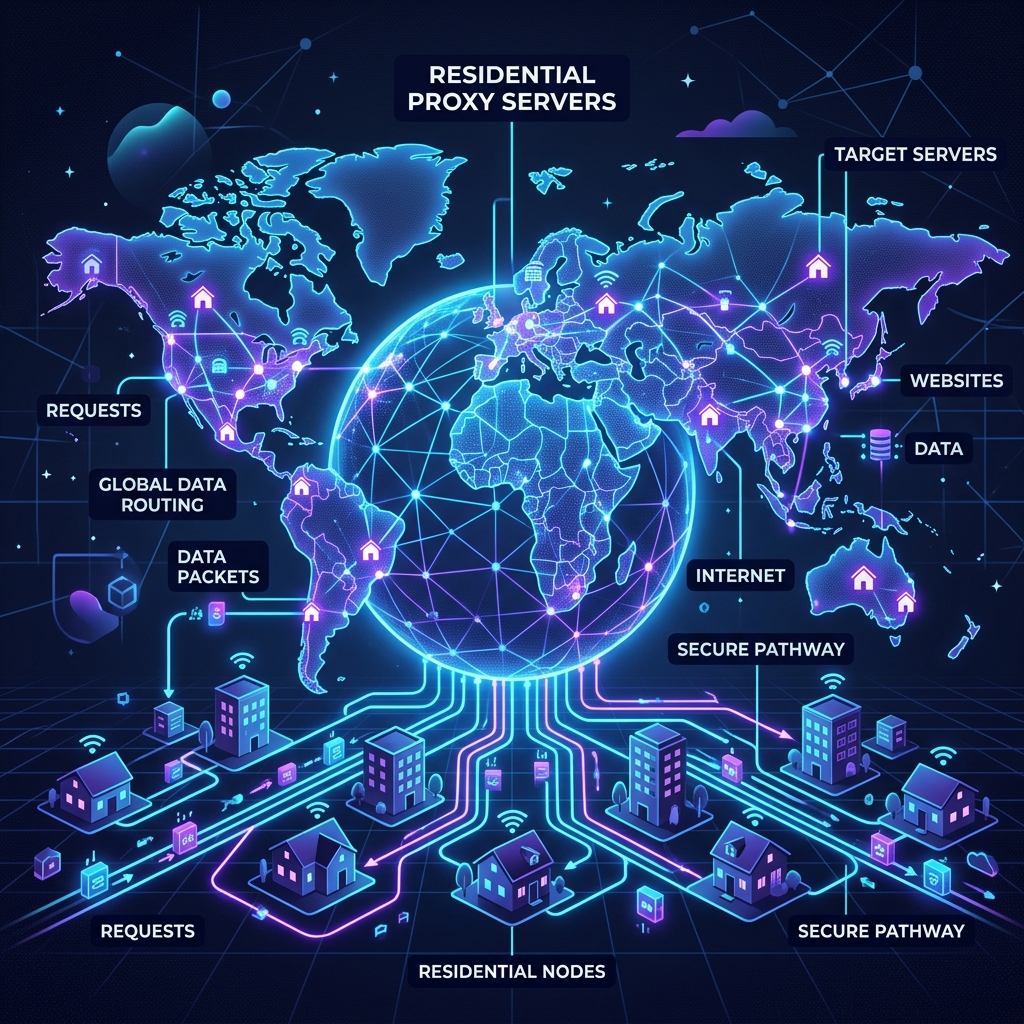
A residential proxy is an intermediary IP address assigned by a legitimate Internet Service Provider (ISP)—such as Comcast, AT&T, Deutsche Telekom, or Vodafone—to a real physical homeowner. When your web scraper or automated application routes traffic through a residential IP, destination servers identify the incoming request as originating from an authentic household consumer browsing on a desktop or Wi-Fi connected mobile device.
Because these IP addresses are registered under consumer Autonomous System Numbers (ASNs), web application firewalls (WAFs) like Cloudflare, Akamai, and PerimeterX assign them the highest possible trust score. Attempting to block residential IP ranges indiscriminately would result in false positives that lock out millions of genuine customers.
2. Residential vs. Datacenter vs. Mobile Proxies
To architect a robust proxy rotation pipeline, engineers must understand the distinct operational tiers of modern IP networks:
- Datacenter Proxies: Created in bulk within cloud hosting providers like AWS, Hetzner, or DigitalOcean. While extremely fast and cheap per gigabyte, their hosting ASNs are heavily fingerprinted. They are best suited for scraping unprotected sites or internal API testing.
- Static Residential (ISP Proxies): Datacenter-hosted servers leased directly from consumer ISPs. They combine the gigabit network throughput of a server farm with the immaculate IP reputation of a home connection. Perfect for social media account management and e-commerce checkout flows.
- Dynamic Residential Proxies: Peer-to-peer (P2P) networks comprising millions of end-user devices across 195+ countries. Every request can rotate to a new IP in a specific city or ZIP code. Ideal for massive SEO keyword monitoring and dynamic localization testing.
- Mobile Proxies: IP pools utilizing 4G/5G cellular carrier networks (e.g., T-Mobile, Verizon). Because thousands of mobile smartphones share a single public Carrier-Grade NAT (CGNAT) IP simultaneously, mobile proxies possess near-zero ban rates.
3. Core Enterprise Use Cases
High-trust residential proxy networks power mission-critical infrastructure across global industries:
🔍 Search Engine Optimization & SERP Audits
Search engines personalize results based on IP geolocation. SEO platforms rotate residential IPs across hyper-local regions to verify localized search engine rankings accurately.
🛒 E-Commerce Price Scraping
Major retailers display dynamic pricing based on user location and device risk scores. Residential pools bypass geo-fencing to monitor competitor catalog pricing in real time.
🛡️ Ad Verification & Fraud Prevention
Ad networks emulate localized user visits via residential endpoints to detect cloak ads, affiliate cookie stuffing, and fraudulent ad impressions.
✈️ Travel & Flight Fare Aggregation
Airline ticket engines deploy strict rate limiters against datacenter crawlers. Residential networks harvest live ticketing inventory without triggering CAPTCHA walls.
4. Technical Implementation: Code Snippets
Integrating residential proxy endpoints into modern backend scrapers involves basic HTTP header authentication. Below is a production-ready Python snippet utilizing session rotation:
import requests

# Define residential gateway endpoint with sticky session formatting
proxy_url = "http://username-country-us-session-rand123:password@proxy.easyipchecker.com:8000"

proxies = {
    "http": proxy_url,
    "https": proxy_url
}

headers = {
    "User-Agent": "Mozilla/5.0 (Windows NT 10.0; Win64; x64) AppleWebKit/537.36 (KHTML, like Gecko) Chrome/125.0.0.0 Safari/537.36",
    "Accept-Language": "en-US,en;q=0.9"
}

try:
    response = requests.get("https://easyipchecker.com/api/check", proxies=proxies, headers=headers, timeout=10)
    print("Assigned Residential IP:", response.json().get("ip"))
    print("ISP Reputation:", response.json().get("isp"))
except Exception as e:
    print("Connection failed:", e)
5. How to Audit Your Proxy Quality
Before committing to enterprise proxy subnets, always audit the IP pools using diagnostic tools:
- Verify DNS Hygiene: Ensure your proxy provider routes DNS queries through the exact same target country to prevent DNS leaks.
- Inspect Fraud Scores: Use our Free IP Lookup Diagnostic to verify that assigned residential IPs maintain a fraud score below 15/100.
- Test WebRTC Anonymity: Check that local browser STUN/TURN requests do not reveal your local ISP address alongside the proxy IP.
By combining high-reputation residential proxy rotation with proper fingerprint management, developers can build resilient, unblockable scraping architecture designed for long-term scalability.